
Universiti Teknologi Brunei (UTB) Moodle
Site announcements
Skip available courses
Available courses
- Teacher: Dr. Zaheer Abas
- Teacher: Safiullah khan
- Teacher: Dr Fadzliwati Mohiddin
- Teacher: Arif Bramantoro
- Teacher: Dr. Ahmad M S Elaklouk
- Teacher: Hj Idham Maswadi Hj Mashud
- Teacher: Dr. Mozaherul Hoque Abul Hasanat
- Teacher: Dr. Ahmad M S Elaklouk
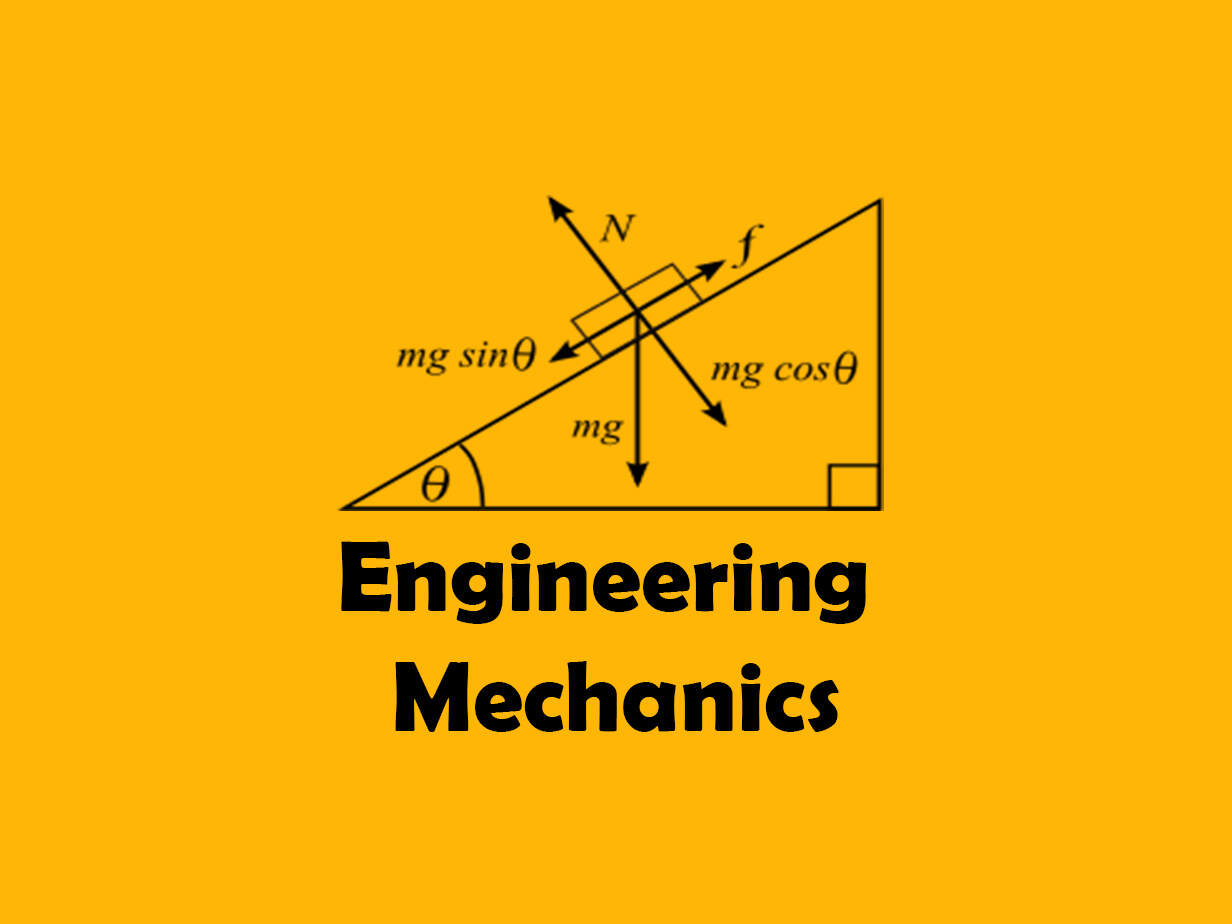
This module aim is to introduce the principles of engineering mechanics with
a particular emphasis on rigid-body statics and dynamics to develop an understanding of the general procedure of analysis.
CONTENT:
This module covers the following topics:
• Scalar and vector quantities, Quantities and units, Forces & Moments:
resultants and components; force-couple system.
• Free Body Diagram; Equilibrium; statical determinacy; 2D and 3D systems
• Internal Reactions: axial force, shear force and moment.
• Analysis of Plane Trusses: Statical determinacy; Method of Joints; Method of
Section.
• Moment of areas and centroid: Centroids of the plane and composite areas;
second and polar moments of areas; parallel axis theorem; the radius of
gyration, and applications.
• Shear Force and Bending Moment Diagrams: Analytical and graphical
methods.
• Introduction to Planar Kinematic and Planar Kinetics of rigid bodies:
Force and acceleration
• Friction: types, static and kinetic friction
• Vibration: Undamped free and forced vibration (one degree of freedom).
- Teacher: Asari Abdul Rashid
- Teacher: Asmaal Mui zz Sallehhin H.M. Sultan
- Teacher: Zuliana Haji Nayan
- Teacher: Rozeana Hj Mohd. Juani
- Teacher: Dr. Ena Kartina Hj Abd Rahman
- Teacher: Pg Dr. Noor Muneerah Pg Hj Jeludin
- Teacher: Hj Ady Syarmin bin Hj Md. Taib
- Teacher: Noor Hadijah Hj Abd Hadi
- Teacher: Soon Jiann Tan
- Teacher: Noor Hadijah Hj Abd Hadi
- Teacher: Dr Yap Yok Hoe
- Teacher: Dr. Hj Md. Khairul Jaafar Hj Masri
- Teacher: Pang Jen Lim
- Teacher: Pang Jen Lim
- Teacher: Dr. Uditha Ratnayake
Introduction: the concept scope and need for financial management in
construction and engineering, and the role of project/construction engineers.
Accounting for financial resources project/construction accounting systems
including different method s of accounting, balance sheet and income statement;
and different types of depreciation methods.
Analysis of financial statements of construction and engineering
organisations : using different categories of financial ratios: profitability ratios,
liquidity ratios, working capital ratios, capital structure ratios, and activity ratios.
Time value of money: compound interest, net present value (NPV), equivalent
annual cost, benefit cost ratio, and loan redemption.
Making financial decisions: internal rate of return (IRR) and NPV, break even
analysis, make or buy decision, financial analysis of a project using all equity case
and equity with loan, and engineering scheme choice decision.
- Teacher: Dr Md Motiar Rahman
|
Aims |
|
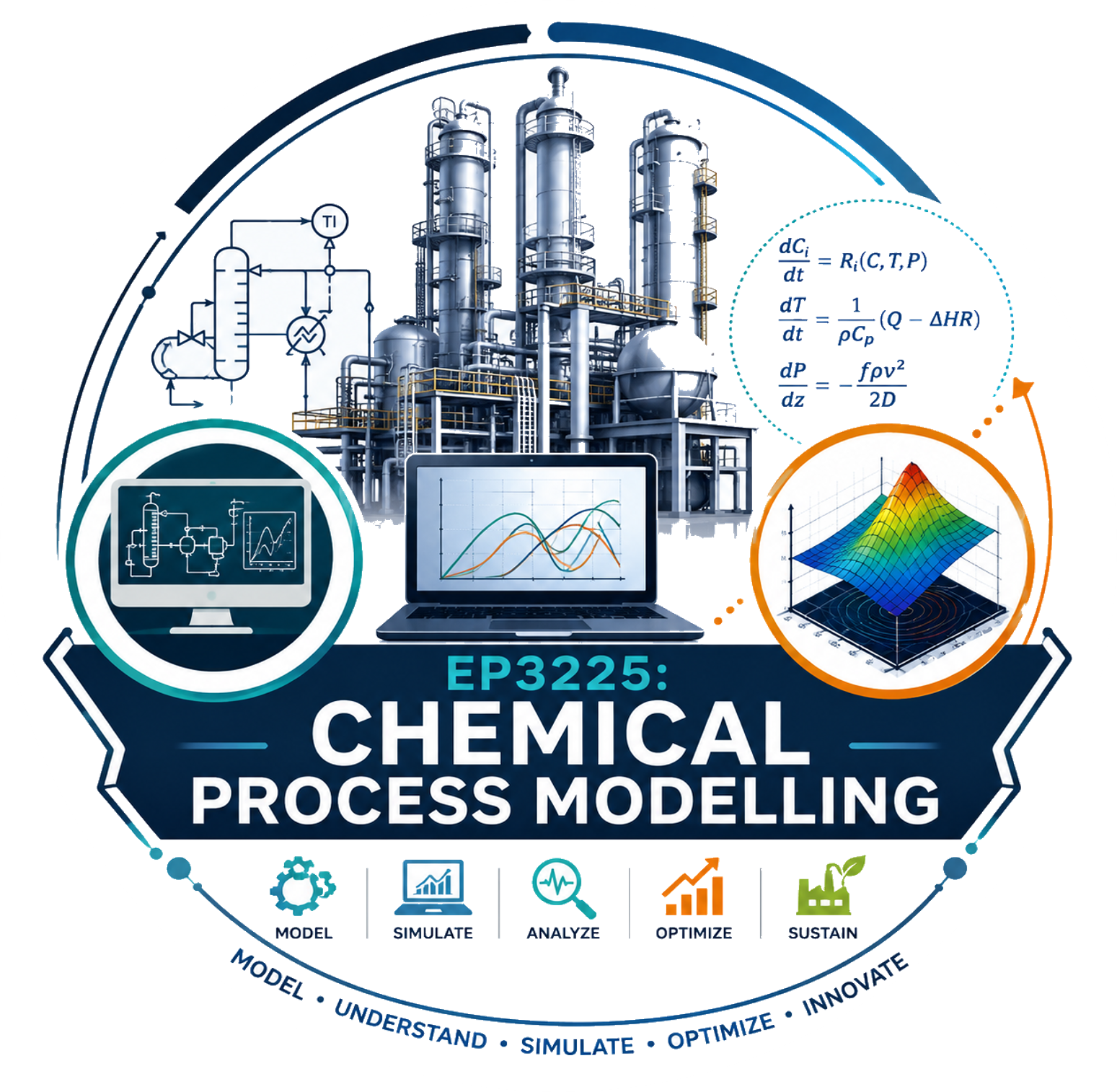
This module aims to develop students with the fundamentals of process modelling which form the key basis for acquiring concepts for understanding the laws behind operation of chemical processes and apply them in process design. |
|
|
|
Summary of Contents |
|
This module covers the following topics: |
|
· Introduction to process modelling: Importance and application of process modelling; Steady state and Dynamic modelling; Developing process flow diagrams; Representation of real processes through models. |
|
· Importance of process modeling and their roles in Industry: Process cum plant engineering's roles; Chemical Engineers as Plant Operators; Core process engineering practices; Opportunities for Process Engineers. |
|
· Fundamentals of process models: Fundamental conservation laws of mass, energy, and momentum; Degrees of freedom; Types of process variables; Key stages in developing a process simulation model; Application to deriving chemical process models. |
|
· Model development techniques: Knowledge of various modelling techniques; Application to chemical processes; Choosing and developing models based on process complexity and industry requirements. |
|
· Numerical methods for solving models: Skills in numerical methods for complex equations; Focus on handling nonlinearities and high dimensionality; Proficiency in using computational tools for simulations. |
|
· Analysing model performance: Importance of model accuracy and reliability; Response to various inputs; Study of dynamic behaviour of process models; Analysis in response to input signals like step changes, impulses, and sinusoidal inputs; Design of control strategies for optimisation and stability. |
|
· Chemical Engineering Applications: Continuous heating in an agitated tank; Heating in a CSTR with reaction; Series of isothermal, constant-holdup CSTRs; Variable holdups CSTRs; Two connected heated tanks; Gas-phase, pressurized CSTR; Nonisothermal CSTR. |
- Teacher: Dr Rama Rao Karri
This module covers the following topics:
• Particle Characterisation: Particle size and shape; Differential and cumulative
size distribution; Mean particle diameters; Specific surface area; Particle
population concepts.
• Particle Breakage and Size Reduction: Mechanisms of breakage (impact,
compression, attrition); Energy-size reduction laws (Kick, Rittinger, Bond);
Introduction to population balance in comminution.2
• Particle-Fluid Interaction: Drag force and drag coefficient; Terminal settling
velocity; Flow regimes (Stokes, intermediate, Newton); Free and hindered
settling; Introduction to fluidisation.
• Particle Separation and Classification: Screening theory and efficiency;
Sedimentation and classification; Cyclone separators (principle and modelling);
Froth flotation fundamentals
• Solid-Liquid Separation: Filtration theory (Darcy’s law); Cake resistance and
compressibility; Washing of filter cakes; Centrifugal separation principles
• Particulate Systems and Bulk Behaviour: Powder flow and rheology; Mixing
and segregation; Agglomeration and granulation; Introduction to multiphase
particulate systems
- Teacher: Dr Md Maksudur Rahman Khan

• Production System Analysis:
Covers the full production chain from reservoir to surface facilities, focusing on how pressure, flow, and fluid properties interact to control well performance.
• Engineering Principles & Flow Modeling:
Applies mechanical energy balance, multiphase flow theory, and nodal analysis to evaluate and predict production behavior.
• Artificial Lift Design:
Introduces major artificial lift methods (ESP, gas lift, rod pump, PCP) and trains students to select and design suitable systems for different reservoir conditions.
• Production Problem Diagnosis:
Develops skills to identify issues such as scaling, water breakthrough, gas coning, and tubing restrictions using engineering analysis and field data.
• Formation Damage & Remediation:
Explains mechanisms causing productivity loss and teaches prevention, mitigation, and workover strategies to restore well performance.
• Digital & Practical Optimization Skills:
Integrates simulation tools, real production data, and case studies to train students in modern production optimization and decision-making.
- Teacher: Dr Bashir Suleman Abushamin
- Teacher: Dr Ishlah Rahman
- Teacher: Adi Mukmin Sarbini
- Teacher: Rahimi Zahari
- Teacher: Ir Dr Mokhtar Awang
- Teacher: Dr Zhwan Dilshad Ibrahim
- Teacher: Dr Zhwan Dilshad Ibrahim
- Teacher: Awg Murhamdillah Morni
- Teacher: Maziri bin Dr Hj Morsidi
- Teacher: Dyg Hjh Azlina @ Adlina Diyanah Hj Abdul Hamid
- Teacher: Awg Murhamdillah Morni

- Teacher: Dr Reena Kumari Vijayakumaran


This is a test course creation.
- Teacher: Awg Zainidi Hj Abd. Hamid